Medical laser

Category-level diode laser systems and fibres for institutional use—energy protocols remain with the clinician.

Application-specific laser system and fibre

In diode laser systems, wavelength determines which tissue structures absorb the energy. The generator, fibre and application protocol are planned as a single system. VascularVita provides institutional product supply and technical support for vascular surgery, proctology, laser lipolysis and selected dermatological applications.

01

Wavelength and tissue interaction

Differences in the absorption of light by haemoglobin and water affect how heat is distributed through tissue. A detailed explanation is available in our wavelength article.

02

Fibre and energy settings

A bare-tip, radial or application-specific fibre is selected according to the target tissue, procedural technique and operating range of the generator. Power and energy settings are defined in the relevant clinical protocol.
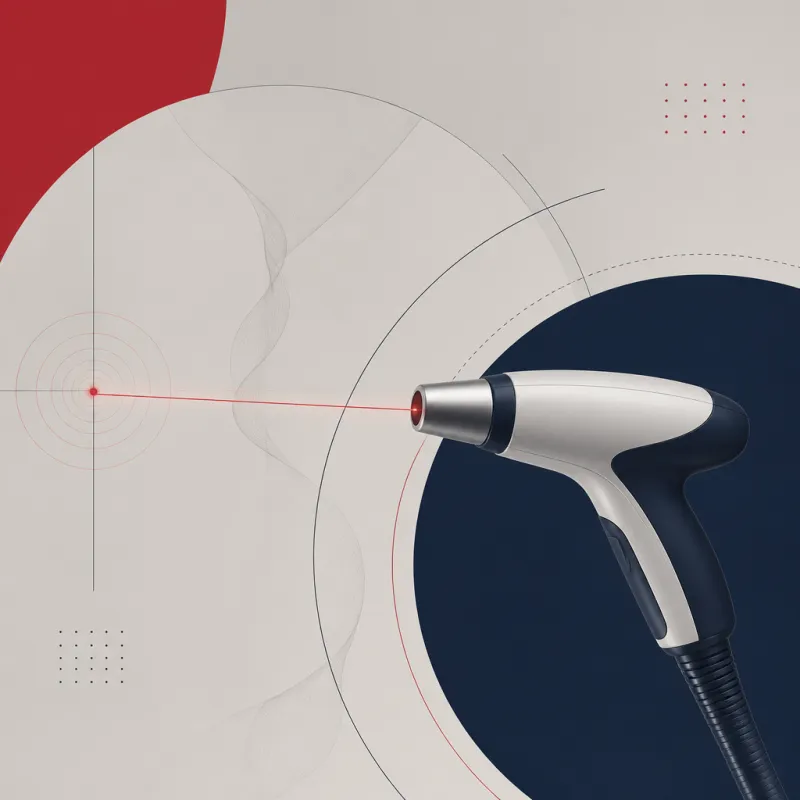
Representative clinical image of the medical laser product line
Representative image — the application and parameters are determined through physician assessment.

Which treatments use diode laser systems?

The wavelength, fibre design and approved indications of the device determine the applications of a diode laser platform.

01

Endovenous laser ablation (EVLA)

A fibre advanced into an incompetent saphenous vein generates controlled heat in the vessel wall. The procedure is performed under ultrasound guidance with tumescent anaesthesia to protect surrounding tissue.

02

Sclerotherapy / exolaser

Transcutaneous laser systems can be used for small superficial vessels. Sclerotherapy is a separate method and forms a different stage of the treatment plan in suitable cases.

03

Haemorrhoid laser

In laser haemorrhoidoplasty (LHP), a dedicated fibre is positioned within haemorrhoidal tissue to deliver controlled thermal energy. Fibre design and the energy protocol are specific to the system used.

04

Laser lipolysis / liposuction

Energy delivered to adipose tissue through a fine fibre facilitates thermal tissue processing. The system is selected for compatibility with the cannula, fibre diameter, wavelength and aspiration method.

05

Skin resurfacing

Dermatological lasers use different wavelengths and handpieces according to the target tissue. Treatment depth, pulse duration and cooling requirements vary with the device protocol.

06

Fistula and pilonidal sinus

Fine radially emitting fibres are used for controlled thermal treatment within a fistula tract or pilonidal sinus channel. Fibre diameter and the pattern of radial emission are key product-selection criteria.

Why does wavelength matter?

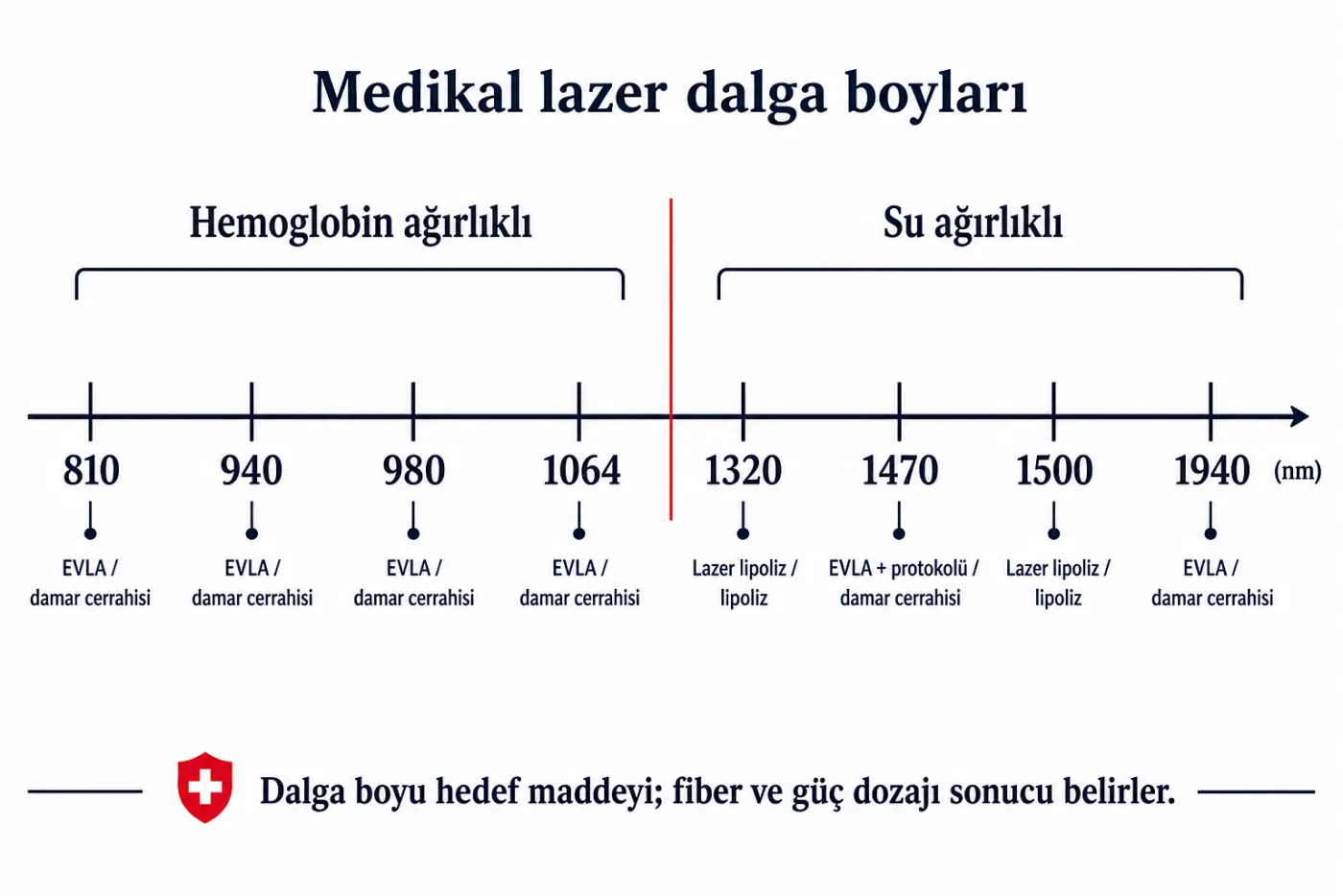
Haemoglobin absorption is more prominent in the 810–1064 nm range, while water absorption becomes more prominent at wavelengths of 1320 nm and above. This difference affects how energy is distributed to the vessel wall and surrounding tissue. For endovenous applications, 1470 and 1940 nm systems used with radial fibres are among the current options.
Read the wavelength article

Medical laser wavelengths from 810 to 1940 nm
Short- and long-wavelength groups — further detail is provided in the blog article.

Medical laser product groups

The product line includes laser generators, application-compatible fibres, connection components and protective accessories. Device compatibility, intended use and the institution’s technical requirements are established before quotation.

Product group

EVLA systems

Diode generators, radial fibres and procedure sets for endovenous laser ablation.

Scope

Endovenous laser generator and EVLA fibre / kit

Enquire about this product

Product group

Exolaser / sclerotherapy

Handpieces, optical components and system accessories for superficial vascular applications.

Scope

Exolaser / superficial vascular laser accessories

Enquire about this product

Product group

Haemorrhoid and proctology

Application-specific fibres and sets for haemorrhoidoplasty, fistula and pilonidal sinus procedures.

Scope

Proctology laser fibres and sets

Enquire about this product

Product group

Laser lipolysis

Diode systems, fine fibres, cannulas and connection components for laser lipolysis procedures.

Scope

Laser lipolysis systems and fibres

Enquire about this product

Product group

Skin resurfacing

Systems with appropriate wavelengths, handpieces and protective accessories for skin applications.

Scope

Skin resurfacing laser applications

Enquire about this product

Product group

Training and technical support

Device installation, user training, consumables planning, maintenance and technical service organisation.

Scope

Installation, training and after-sales support

Enquire about this product

Institutional supply scope

The quotation file clearly states the device specifications, fibre compatibility, consumables list, warranty, maintenance and training scope. For Class 4 laser systems, the treatment area, eye protection and user training are organised in accordance with the institution’s laser-safety procedure.

Scientific basis

Selected publications on endovenous ablation, wavelength selection and laser lipolysis.

  1. van den Bos RR, et al. EVLA mechanisms and modelling. Lasers Med Sci. 2014 · PubMed 24220848
  2. Doğancı S, Demirkılıç U. 980 nm vs 1470 nm radial EVLA. EJVES. 2010 · PubMed 20547079
  3. Reynaud JP, et al. Lipolysis with a 980-nm diode laser. PubMed 18506510
  4. VascularVita blog — Medical laser wavelengths
  5. kadirceviker.com — Varicose veins

Product and collaboration information

Contact our team for technical scope, supply and institutional collaboration.

Contact us

WhatsApp