
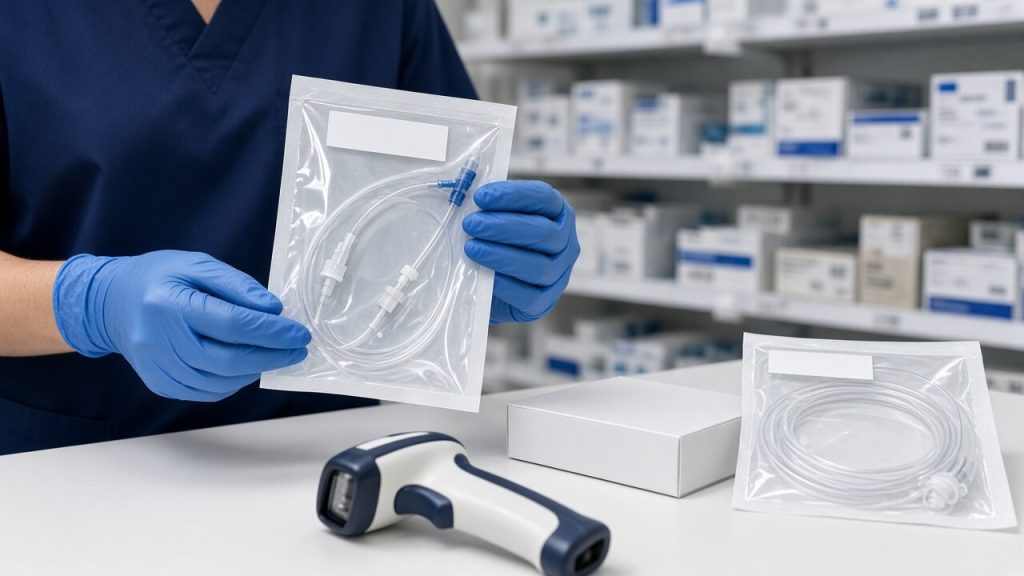
Size and compatibility of interventional devices: using the IFU
In interventional vascular devices, diameter, length and the IFU compatibility table form the basis of the order line. Size, guidewire and sheath are checked together.
Read article
Carotid, EVAR and TEVAR: a terminology glossary for procurement
From carotid stents to abdominal and thoracic aortic stent grafts: a short glossary of terms shared by purchasing, warehouse and clinical teams.
Read article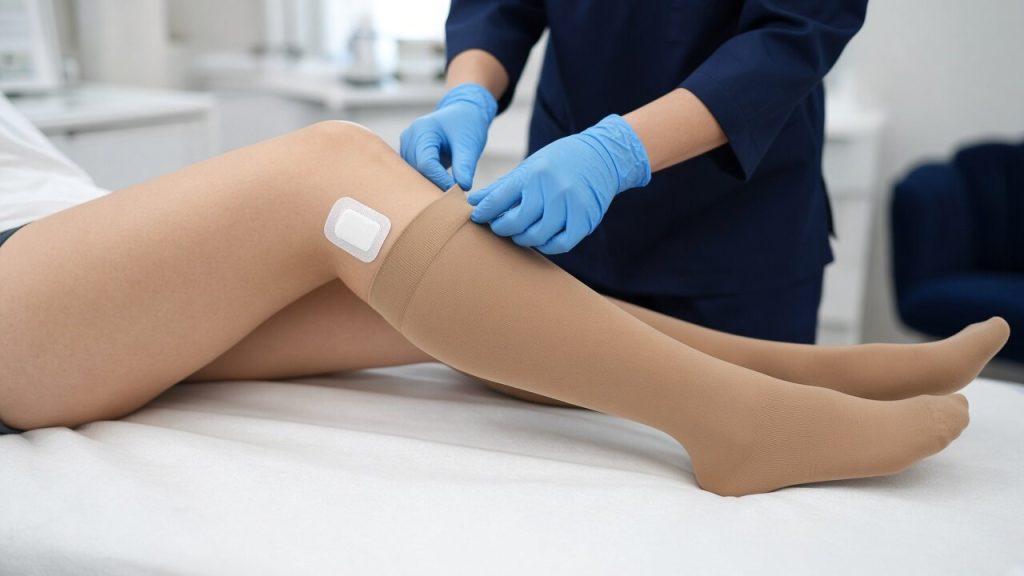
Compression after EVLA: key clinical questions
Compression after EVLA cannot be reduced to a single pressure value. Duration, pressure class, stocking length and follow-up are discussed through an anonymised case.
Read article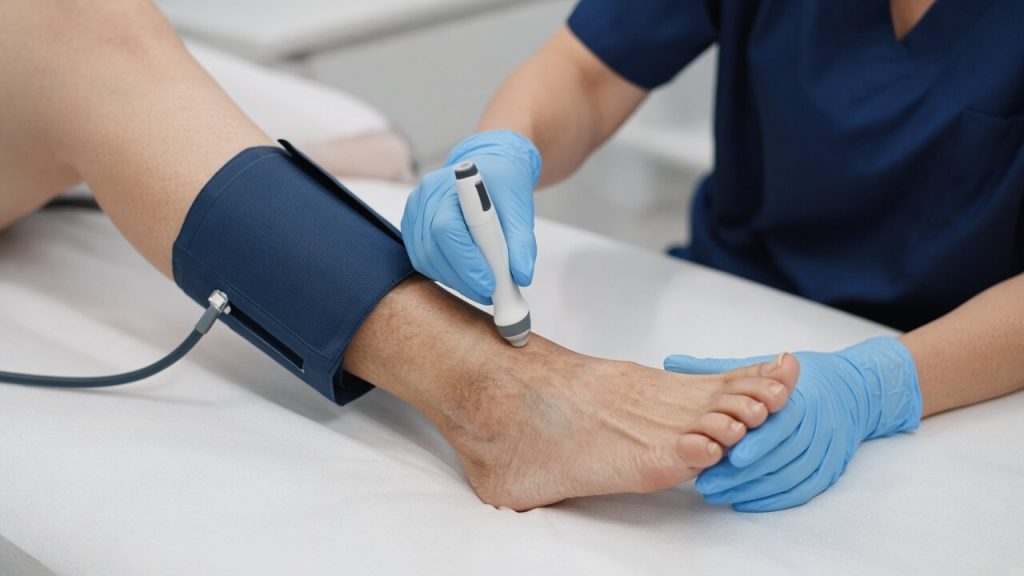
C4 venous disease with oedema and skin damage: clinical priorities
In CEAP C4, treatment is not planned in a single step. Arterial circulation, duplex findings, infection and compression sequence are discussed through an anonymised case.
Read article
The limits of regenerative approaches
Functional care, indicated use and research are assessed separately. An exosome batch is judged by characterisation and MISEV reporting, not by the claim alone.
Read article
Evidence tiers in the healthspan discussion
Healthspan claims should be interpreted by evidence tier: functional outcomes and guidelines first, then early human data. A biomarker alone does not determine treatment.
Read article
Inflammation and vascular ageing: clinical relevance
Low-grade inflammation that increases with age impairs endothelial function and reduces perfusion. The effects appear in walking distance, wound healing and daily function.
Read article
Why blood clots form in the veins on long flights and coach journeys
On long flights and coach journeys, venous clots are linked to calf-muscle inactivity and fluid loss. Risk rises with journey duration and personal risk factors.
Read article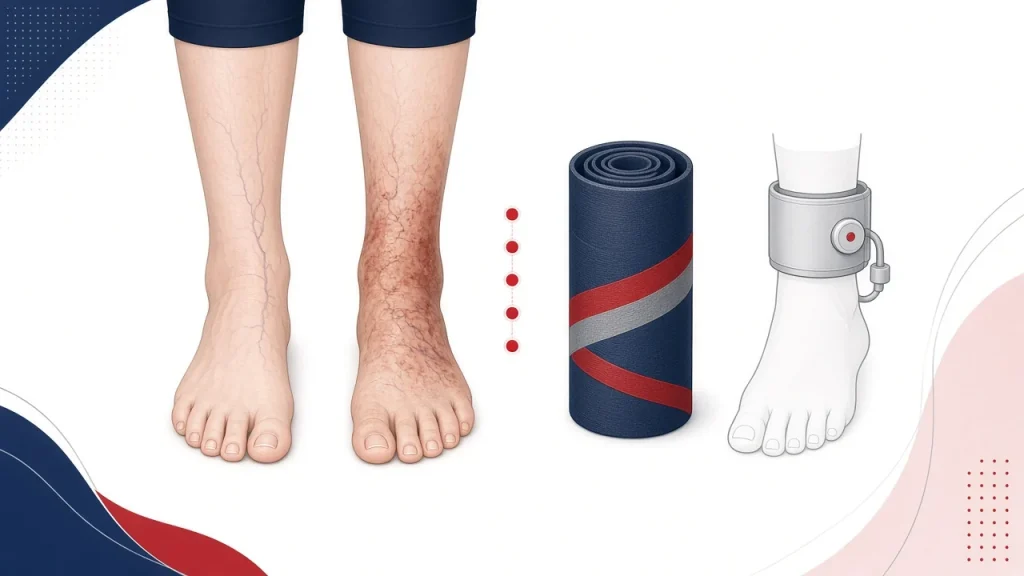
Compression planning by CEAP clinical stage
Compression planning combines CEAP clinical stage with oedema, skin findings, arterial circulation, mobility and the patient’s ability to use the product.
Read article
When is an antimicrobial dressing indicated?
An antimicrobial dressing decision rests on clinical assessment of infection and on antimicrobial stewardship; a positive culture alone is not an indication.
Read article