In VascularVita longevity work, the aim is not to reverse chronological age. The aim is to protect the years in which a person can walk, decide, and sustain daily life — healthspan. Ageing is not reduced to a single test. Cellular and molecular decline, organ-system change, a person’s intrinsic capacity and daily function form a single continuum. Management follows from this assessment: define the clinical picture, reduce risk, give indicated treatment and monitor.
At the cellular level, one of the antagonistic drivers in this continuum is deregulated nutrient sensing. In López-Otín and colleagues’ framework of the hallmarks of aging, this hallmark is antagonistic because growth signals that are useful early in life can become harmful when they remain excessive and chronic in adulthood. Genome, telomere, epigenetic, and proteostasis open the primary layers; this article describes the cell’s nutrient and energy decision. All nine hallmarks appear in the nine hallmarks of ageing; the programme is described in the ageing stages and in individual assessment.
What does nutrient sensing mean?
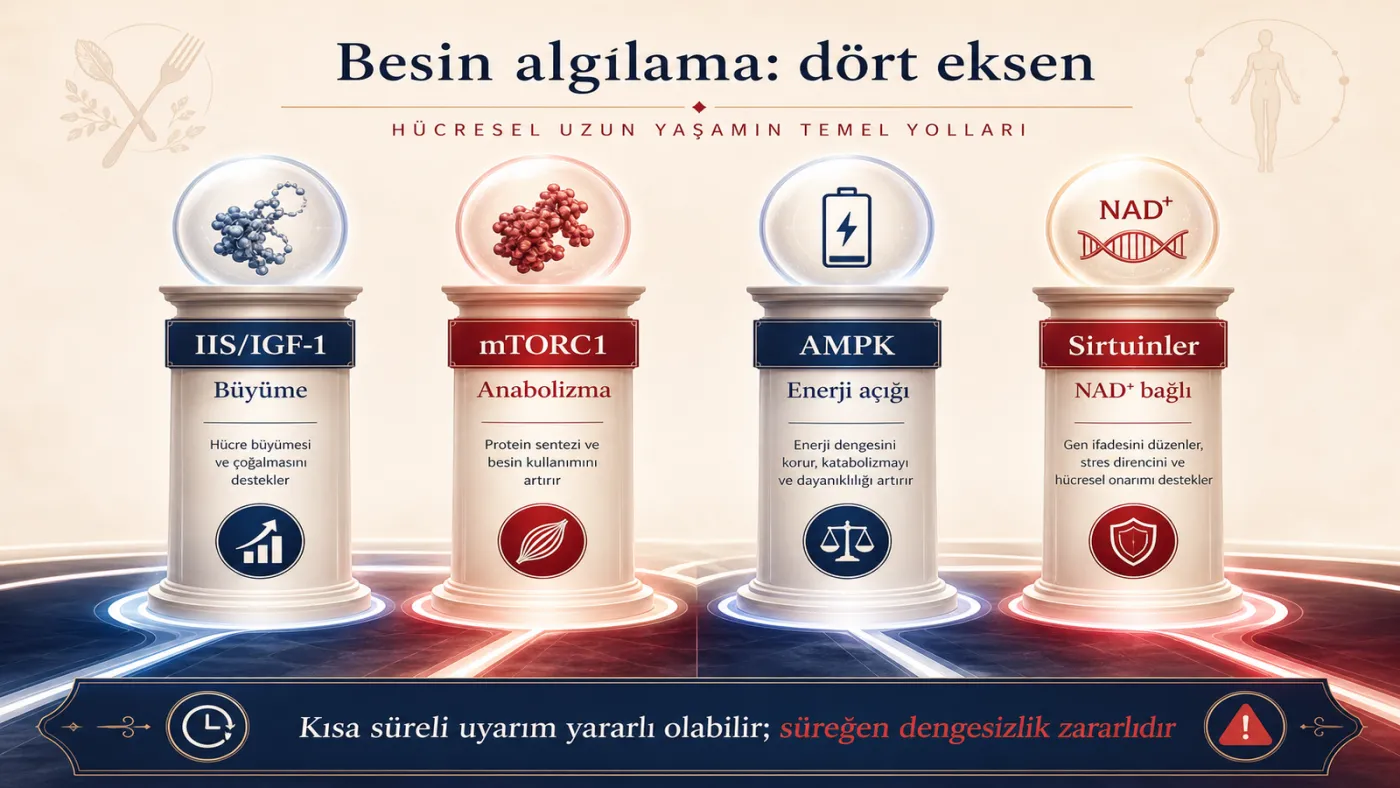
The cell switches between growth and maintenance modes according to nutrient and energy status. Four main pathways stand out. Insulin / IGF-1 signalling (IIS) mediates growth and glucose responses. mTORC1 (mechanistic target of rapamycin complex 1) increases anabolism with amino acids and growth factors. AMPK (AMP-activated protein kinase) senses energy scarcity and activates maintenance pathways. Sirtuins play a role in stress and metabolic responses tied to NAD⁺ levels.
The typical shift with age is towards chronic anabolic signalling and a weakening maintenance response. When mTORC1 remains excessive, autophagy is suppressed; that link overlaps with proteostasis and mitochondrial maintenance. Clinical faces include type 2 diabetes, visceral fat, and metabolic syndrome (López-Otín 2023).

What can be done?
The most mature lever is lifestyle. In the appropriate individual, sound nutrition, calories, and timing influence the mTOR–AMPK balance. Aerobic and resistance exercise strengthen insulin sensitivity and the AMPK response. Intermittent fasting or time-restricted eating supports the same network in some individuals; in those at risk of frailty or muscle loss, strengthening comes first.
In disease indication, metformin, SGLT2 inhibitors, and GLP-1 receptor agonists manage metabolic risk by guideline; from a geroscience view they are a secondary bridge. In research, TAME (Targeting Ageing with Metformin) was designed to test whether metformin delays the cluster of age-related diseases. Rapamycin and rapalogs suppress mTORC1; lifespan extends in model organisms, human longevity RCTs are limited, and trade-offs exist (Mannick and Lamming, 2023). NAD⁺ precursors are at an early research level.
What is done in management?
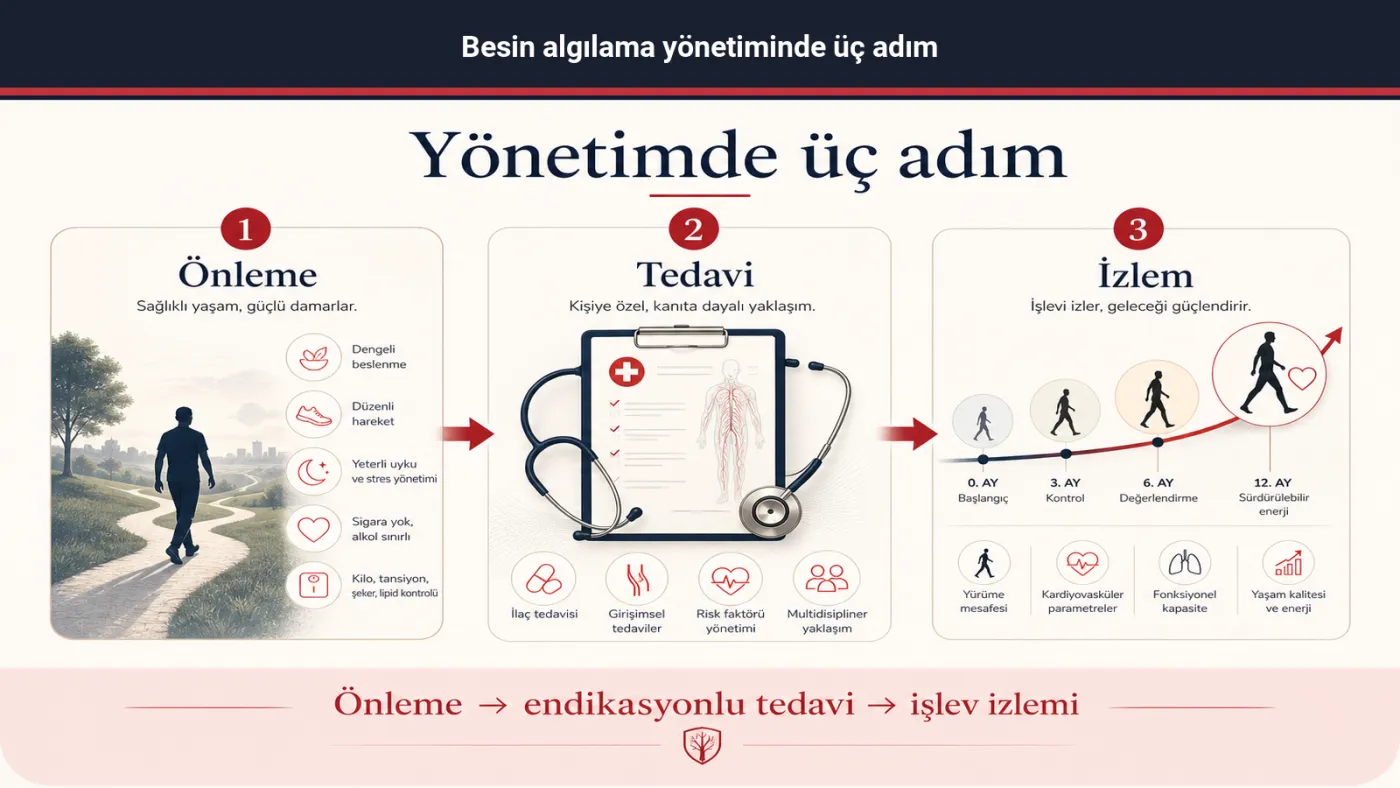
In the VascularVita approach, deregulated nutrient sensing is addressed in three concrete steps.
First is prevention. Sound nutrition and aerobic and resistance exercise balance metabolic signalling. The aim is not “fasting or metformin for everyone,” but choosing the lever suited to the individual’s capacity.
Second is disease-guided treatment. When type 2 diabetes, metabolic syndrome, or cardiometabolic risk is present, treatment follows the guideline. Longevity screening assesses the ICOPE domains, frailty, and daily function together; it does not assign a stage from a single “metabolic age score.”
The third step is monitoring over time. Glucose control, weight distribution, movement capacity, and independence are reassessed at defined intervals. This assessment is described on the healthy lifespan, individual assessment, and ageing stages pages.
Summary
Deregulated nutrient sensing is the age-related imbalance of the IIS–mTOR–AMPK–sirtuin network; it is an antagonistic hallmark of ageing. The most mature intervention is nutrition and physical activity. Indicated metabolic drugs belong to disease-specific care. TAME and rapamycin matter in research; they are not an off-label longevity package. In VascularVita longevity management, this hallmark is addressed through prevention, indicated treatment, and function-focused monitoring.
References
- López-Otín C, Blasco MA, Partridge L, Serrano M, Kroemer G. The hallmarks of aging. Cell. 2013;153(6):1194–1217. doi:10.1016/j.cell.2013.05.039 · PMC3836174
- López-Otín C, Blasco MA, Partridge L, Serrano M, Kroemer G. Hallmarks of aging: an expanding universe. Cell. 2023;186(2):243–278. doi:10.1016/j.cell.2022.11.001
- Kennedy BK, Berger SL, Brunet A, et al. Geroscience: linking aging to chronic disease. Cell. 2014;159(4):709–713. doi:10.1016/j.cell.2014.10.039 · PMC4852871
- Mannick JB, Lamming DW. Targeting the biology of aging with mTOR inhibitors. Nat Aging. 2023;3(6):642–660. doi:10.1038/s43587-023-00416-y
- Murillo-Cancho AF, Lozano-Paniagua D, Nievas-Soriano BJ. Dietary and pharmacological modulation of aging-related metabolic pathways. Int J Mol Sci. 2025;26(19):9643. doi:10.3390/ijms26199643
- Zhang T, Zhou L, Makarczyk MJ, Feng P, Zhang J. The anti-aging mechanism of metformin: from molecular insights to clinical applications. Molecules. 2025;30(4):816. doi:10.3390/molecules30040816
- World Health Organization. World report on ageing and health. Geneva: WHO; 2015. who.int
- Cesari M, Araujo de Carvalho I, Amuthavalli Thiyagarajan J, et al. Evidence for the domains of the WHO’s Integrated Care for Older People (ICOPE). J Gerontol A Biol Sci Med Sci. 2018;73(12):1653–1660. doi:10.1093/gerona/gly011
- Fried LP, Tangen CM, Walston J, et al. Frailty in older adults: evidence for a phenotype. J Gerontol A Biol Sci Med Sci. 2001;56(3):M146–M156. doi:10.1093/gerona/56.3.m146
Related articles
- Loss of proteostasis: protein maintenance and ageing
- Mitochondrial dysfunction: energy and ageing
- Altered intercellular communication
- Epigenetic alterations: gene expression and ageing
- The nine hallmarks of ageing
- Healthy lifespan (healthspan)
- ICOPE and intrinsic capacity
- Frailty and early findings
- Longevity and healthy living · Ageing stages · Individual assessment